Installing a Disappearing Fountain: Materials, Steps & Care
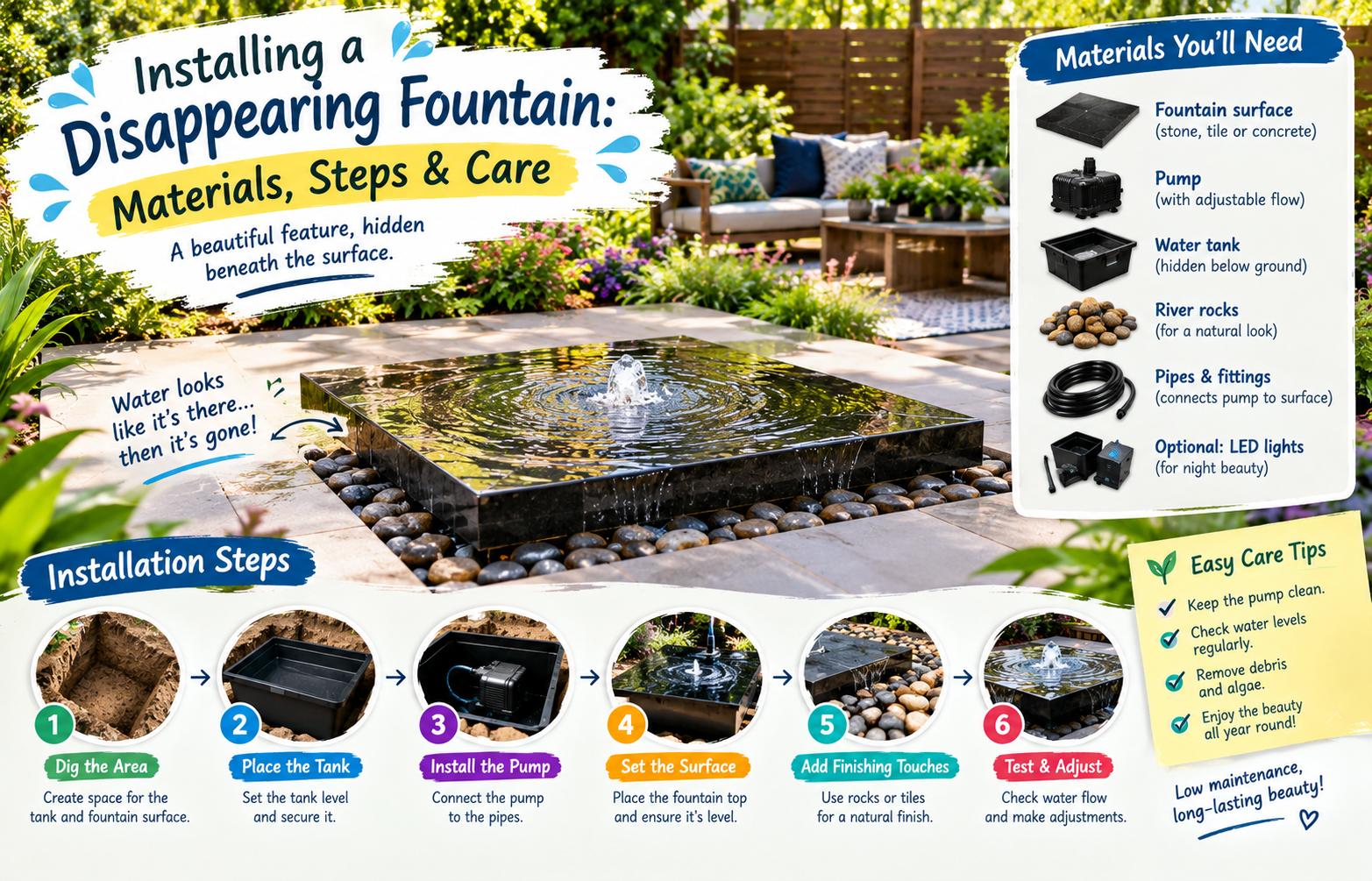
A disappearing fountain brings a calm, natural sound to any yard without taking up much space. Water rises from a hidden basin, flows over stones, and vanishes back into the ground. There is no open pool to worry about, which makes it a popular choice for families with kids or pets.
On this page
Table of Contents
On this page
Table of Contents
If you are wondering how to install a disappearing fountain in your own yard, this guide walks you through everything from start to finish. We will cover the materials you need, the steps to follow, and the simple care routine that keeps your fountain running for years.
Why This Fountain Style Works So Well
Unlike a traditional fountain, this style hides the water below ground level. You only see the visible feature, like a stone sphere or a small bubbling rock, along with a bed of gravel around it.
This design cuts down on maintenance. There is less standing water exposed to sunlight, which means less algae buildup. It also looks tidy year-round, since there is no large pool collecting leaves or debris.
Before jumping into the build, it helps to gather a clear picture of what the project actually needs.
Materials You Will Need
Every successful project starts with the right materials. Here is a simple list to work from:
- Underground basin or reservoir – Holds the water supply below the surface.
- Submersible water pump – Moves water from the basin up through the fountain feature.
- Grate or grid cover – Sits above the basin to support the weight of stones.
- Fountain feature – This could be a stone ball, millstone, urn, or any decorative piece with a hole for water flow.
- Flexible tubing – Connects the pump to the fountain feature.
- Landscape fabric – Keeps soil and debris out of the basin.
- Gravel or river rocks – Covers the grate for a natural, finished look.
Once you have these items ready, the actual work of learning how to install a disappearing fountain becomes much easier to manage.
Inside the Yourhomify community, homeowners often trade tips on which materials work best for different climates and yard sizes.
The Installation Steps
Here is a clear walkthrough of the process, broken into manageable steps.
Pick a Good Spot
Choose a flat area of your yard, away from large tree roots. Roots can grow into the basin over time and cause cracks or blockages. Also avoid spots where rainwater naturally pools, since that can lead to overflow issues later.
Dig the Hole
Dig a hole slightly larger than your basin. Pack down the soil at the bottom so it sits flat and even. An uneven base is one of the most common reasons fountains run into trouble later on.
Place the Basin
Lower the basin into the hole and check that the top edge sits level with the surrounding ground. Use a small level tool to confirm this before moving forward.
Install the Pump
Set the submersible pump inside the basin. Attach the tubing to the pump, running it up toward the spot where your fountain feature will sit.
Add the Grate
Place the grate over the top of the basin. This supports the fountain feature and the stones around it, while still allowing water to pass through and drain back down.
Set the Fountain Feature
Place your chosen stone or decorative piece on top of the grate. Connect the tubing so water can flow up through the center and spill back down over the surface.
Add Stones and Fill with Water
Surround the base with gravel or river rocks for a natural look. Fill the basin with water, then turn the pump on to test the flow.
Learning how to install a disappearing fountain step by step like this makes the process far less overwhelming, especially for first-time builders.
Caring for Your Fountain After Installation
Once your fountain is up and running, a simple care routine keeps it working well.
- Watch the water level. Water evaporates over time, especially in warm weather. Top it off regularly so the pump does not run dry.
- Clean the pump periodically. Dirt and small debris can clog the pump. Rinse it every few weeks to keep water flow steady.
- Clear away leaves and debris. Even hidden basins can collect leaves through the grate. Check every so often and remove anything blocking the flow.
- Watch for algae. If the water starts turning green, a mild fountain-safe cleaner can help control growth without harming nearby plants.
- Prepare for winter. In colder regions, drain the basin and bring the pump indoors before freezing temperatures arrive. Ice can crack the basin or damage the pump motor.
A little regular care goes a long way in keeping your fountain looking and sounding its best.
Mistakes That Are Easy to Avoid
A few small missteps tend to cause the most trouble:
- Choosing the wrong pump size. Too weak, and the flow looks lifeless. Too strong, and water splashes outside the basin.
- Skipping the level check. Even a slight tilt can send water pooling to one side.
- Forgetting landscape fabric. Without it, dirt and roots can work their way into the basin faster than expected.
- Ignoring winter prep. Freezing water is one of the most common causes of cracked basins and damaged pumps.
Avoiding these simple mistakes saves time, money, and frustration down the road.
Wrapping Up
A disappearing fountain adds a peaceful touch to any yard while staying safe and low maintenance. With the right materials, a clear set of steps, and a simple care routine, your fountain can run smoothly for years to come. Once you understand how to install a disappearing fountain the right way, the whole project becomes far less intimidating, and the results speak for themselves.
Frequently Asked Questions
Is this something I can build myself?
Yes. Most homeowners complete the project in a single weekend using basic tools, without needing to hire a professional.
Comments
0 comments
No comments yet. Be the first to comment.
Related Articles

Jun 18, 2026
Why Every Buyer Needs a New Home Inspector Before Closing
There is a common belief that brand new construction does not need the same scrutiny as an older resale property. Many buyers assume that because everything looks fresh and untouched, the home must be free of problems. This assumption is exactly why hiring a new home inspector has become such an important step in the…
Jun 16, 2026
A Complete Guide to Plumbing Services Ealing Homeowners and Landlords Can Access
Ealing is a thriving residential borough in west London with a wide variety of housing, from compact flats to large family homes. With so many properties and so many people relying on properly functioning plumbing every single day, the demand for quality plumbing services Ealing residents can trust is significant. Whether you are dealing with…