Indian Food Near Me: Stop Ordering Four Versions of the Same Dish
Here is a mistake almost everyone makes, and it is invisible until someone points it out. You order four things that sound different, they arrive, and somehow the meal feels flat halfway through. Nobody can say why.
On this page
Table of Contents
On this page
Table of Contents
The reason is usually that all four dishes were the same underneath. Same consistency, same base, same register. When you search for indian food near me and finally sit down with a menu, the problem is not the kitchen. It is that most people order by picking their four favourite descriptions, and favourites cluster.
So here is a better method, built on contrast rather than preference.
Why the clustering happens
People gravitate toward what they already know. Read any Indian menu and the familiar names pull your eye: butter chicken, tikka masala, korma, something with paneer in a creamy sauce.
Every one of those is a gravy based dish built on a similar foundation of onion, tomato or cream. Order three of them and you have three bowls of sauce that differ in detail but not in kind. Add rice and the plate has no texture anywhere.
It is not that any single dish is wrong. It is that four of them together cancel each other out, because nothing on the table provides relief from anything else.
The fix is a shape, not a list
Instead of choosing four dishes you like, fill four slots that do different jobs. One dry or grilled item, one gravy main, one vegetable dish, and bread to carry it. That shape works for almost any table of two, and it scales up cleanly.
The logic is that each slot contributes something the others cannot. The grilled item brings char and texture. The gravy brings richness. The vegetable brings sharpness or bitterness or sourness, depending on the dish. The bread ties it together. Miss any one of them and the meal tilts.
Let me put real dishes into the shape so it is concrete.
Slot one: something dry or grilled
This is the slot people skip, and skipping it is the single biggest reason a meal feels heavy rather than balanced.
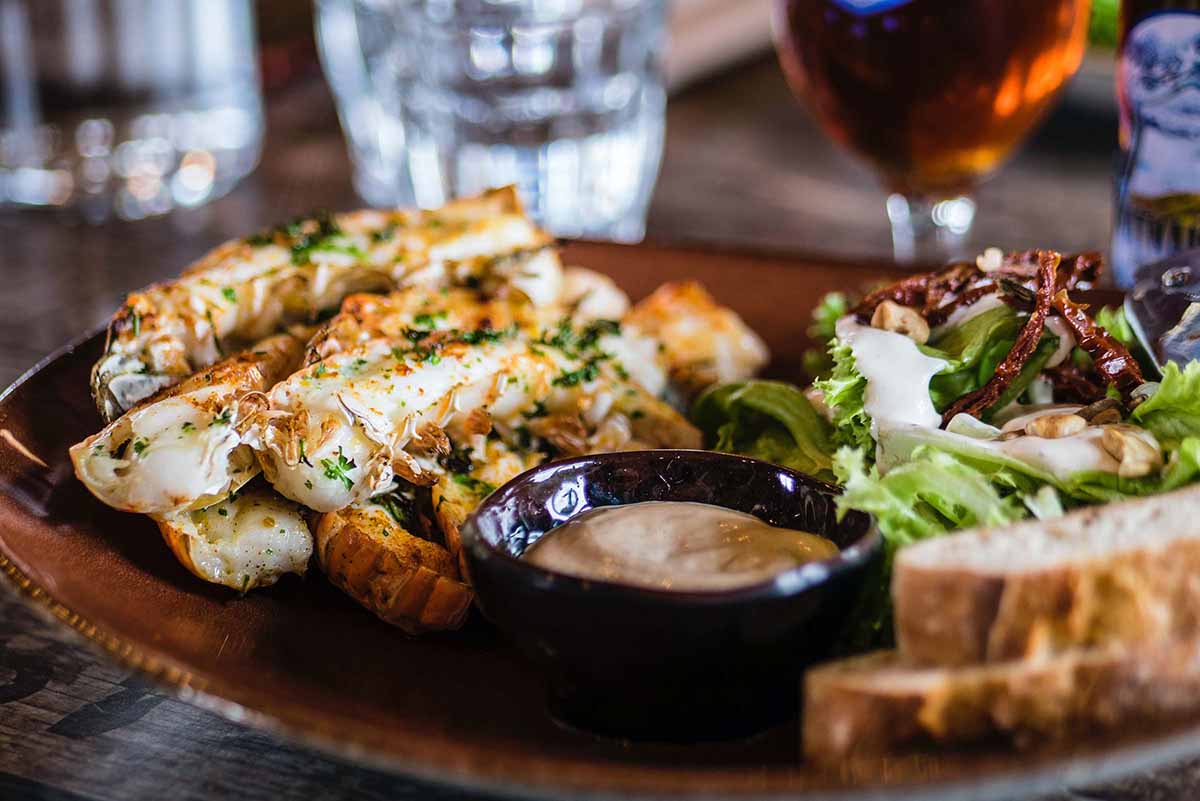
At Rasoi the tandoor section is where this lives. Afghani Chicken Tikka at 13,50 is marinated in cream and cardamom rather than the usual yoghurt and chilli, so it comes out pale and aromatic instead of red and sharp. Dahi ke Kebab at 12,95 is hung yoghurt with herbs, fried until crisp outside and soft within. For a vegetarian table, Malai Broccoli Kebab at 13,95 roasts broccoli in spiced yoghurt until it is smoky.
Any one of these gives the table a dish with an actual surface, which is exactly what three gravies lack.
Slot two: one gravy, and only one
This is where you spend your familiar pick, because one rich curry is plenty for two people.
If you want the comfortable end, Butter Chicken at 23,50 does the job and is a chef’s signature here. If you want something a step sideways, Mughlai Chicken at 22,50 uses a cashew and onion base instead of tomato, which makes it rounder and less acidic. For a vegetarian gravy, Malai Kofta at 19,25 sits in the same mild, rich territory.
The discipline is ordering one, not two. The second gravy is what flattens the meal.
Slot three: the vegetable dish that is not a side
People treat vegetable dishes as filler. They are the opposite, and they are also the cheapest interesting things on most Indian menus.
Baingan Bharta at 16,95 is roasted and mashed aubergine with onion and tomato, smoky and completely different in texture from anything saucy. Khatta Meetha Baingan at 16,50 is the same vegetable pulled between sweet and sour, and it is a chef’s signature despite being one of the cheapest mains. Bhindi Do Pyaza at 18,50 is okra with a lot of caramelised onion.
Each of these does something a curry cannot, which is the entire point of the slot.
Slot four: plain bread, not stuffed
Butter Roti at 3,75 or Malabar Parotta at 3,75, the latter layered and flaky.
The stuffed and cheese breads are good, but at 6,45 to 6,95 they compete with the food rather than supporting it, and a cheese naan next to a rich gravy is two rich things fighting for the same job. Plain bread costs less and works harder.
Adapting the shape
The four slots hold steady while the contents move to fit the situation.
Feeding four: add a biryani rather than a second gravy. Chicken Dum Biryani at 22,50 or Vegetable Biryani at 20,50 anchor a bigger table and are cooked sealed in a pot.
Someone is vegan: several dishes are marked vegan on request, including the Bhindi Do Pyaza and Mushroom Mutter Masala. Say so when ordering, since the kitchen builds them differently rather than removing something at the end.
Ordering for delivery: drop the tandoor dish, because anything with a charred surface softens in a sealed container. Swap in a second vegetable dish or a biryani instead.
Keeping the cost down: two vegetable mains at 15,50 to 16,95, one tandoor item, and bread comes in around forty euros for two and eats better than one expensive main each.
Where this leaves you
The rule underneath all of it is that a good order is built on contrast, not on four favourites. Something dry, something wet, something vegetable, something to eat it with.
Learn the shape once and you never stare at a menu for ten minutes again. It also doubles as a test of the restaurant itself. If you are weighing up which indiase restaurant amsterdam to book, check whether the menu can actually fill all four slots properly. Plenty of long menus cannot, and that tells you more than any review.
Comments
0 comments
No comments yet. Be the first to comment.
Related Articles

Sep 10, 2026
Windham Restaurant Menu: A Guide to Enjoying a Great Meal in Windham, NH
Finding a restaurant with a menu that offers something for everyone can make dining out much easier. Whether you are planning a casual lunch, a family dinner, or a meal with friends, having a variety of choices is important. A well-planned windham restaurant menu can offer different flavors, meal sizes, and options to suit different…
Aug 2, 2026
Affordable Branding with Custom Puzzle Shape Tags
Custom Puzzle Shape Tags are becoming a simple choice for many small brands and shops. They look different and feel playful, which helps products stand out without much effort. People like them because they add a soft, creative touch to packaging and labels. They are easy to understand and easy to use in many business…